

Maria Rosaria Luberto is one of the winners of the Young Researchers Seal of Excellence Call 2022 of the University of Siena. The call was promoted by the Italian Ministry of University and Research as part of the National Recovery and Resilience Plan (PNRR). Now she is a fixed-term researcher at the University of Siena.
UrbArTs is a project devoted to the analysis of the birth and development of the city as a part/product of the territory it belongs to, through the case study of Kroton and the Krotoniatide (South Italy) 16th to 5th c. BC. The focus is on the archaeological data to read these processes ‘from the ground’, in their endogenous generation. Through specific training and collaborations, scientific results will become outputs to be shared with communities for their conscious involvement in cultural heritage protection and with governmental institutions for implementing activities of cultural heritage management.
Maria Rosaria Luberto is an Italian archaeologist, who specialized in the field of the Archaeology of Magna Graecia. She graduated in Classics at the University of Florence, where she continued her studies at the Scuola di Specializzazione in Archeologia and obtained her Ph.D. in History and The Civilization of the Ancient World. At the University of Florence, she taught the Archaeology of Magna Graecia, at BA and MA courses, and the Scuola di Specializzazione. Her post-doctoral research developed between Italy (University of Florence, IMT-Lucca) and Greece (Italian School of Archaeology at Athens), and focused on material culture and the development of urban centers between 8 8th and 6th centuries BC.
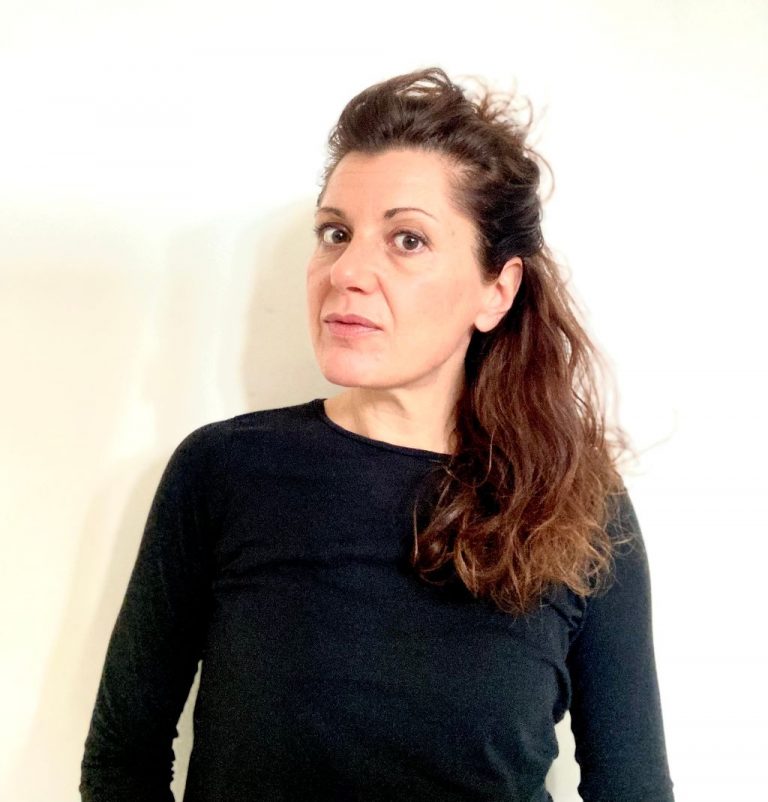
“The possibility to work outside research and academic environments, my practical and biographical experiences (she was born in Calabria where she lived until the age of 18), and my acquired knowledge of places, people, and problems, gave me the possibility to elaborate research programs intended not only for scientific purposes but also for trying to ‘fill the gap’ concerning the needs of local communities.“
Maria Rosaria Luberto
WHO SHE IS
WHY UNISI
She worked mainly in South Italy, conducting excavations and research in the most important sites and museums of the ancient poleis of Magna Graecia, such as Taranto, Metaponto, Sybaris, Kroton, Kaulonia, and Locri. She also collaborated with the National Archaeological Museum of Florence for curating several exhibitions. Her scientific background and knowledge gave her the possibility to work, as an external expert, for long periods with the Italian Ministry of Culture in field projects and activities of digitalization, inventorying, cataloging archival documents, and archaeological finds.
In 2016, she directed a survey in Caulonia (actual Monasterace Marina) with the University of Florence, also involving local young students and newly graduated in the field of cultural heritage, with the precise aim to develop a ‘local consciousness’ on themes such as valorization, preservation, dissemination and also on the possibilities that working on cultural heritage in South Italy offers. Since 2018, she has collaborated with the Italian School of Archaeology at Athens as chief editor of the Publication Staff and as scientific responsible for the cataloging of 40.000 finds of the MArTa, Taranto.
This is the background of the UrbArTs project, which will be developed at the University of Siena
where utmost attention is allocated to Public Archaeology, in its overall meaning, and to the needs
of communities in developing scientific activities that must have also useful social impact. From a
purely scientific point of view, the expertise of the scholars of the Department of History and Cultural Heritage of the Università di Siena covers all the fields of study of Antiquity, from Prehistory to the Middle Ages.
For the correct shaping of scientific methods and research perspectives, UrbArTs will benefit from the knowledge in Mediterranean Archaeology and material culture, attested by research, survey, and field projects in Greece (Hephaestia, Dionysias, Gortyna), Morocco, Egypt, Calabria (Arena), Sicily (Segesta). UrbArTs is a particularly close fit also with the research interests and technical skills of the Department in the field of Landscape and Digital
Archaeology, Ancient Architecture, Building techniques, Databases, and Material Culture, while it
could complement the ongoing research of the Department on central Italy (Etruria).
 Finanziato dall’Unione europea – Next Generation EU