

For centuries, the sea was regarded as an open space, a common resource that no one could own. Then, within just a few decades, it became territory: measured, divided, and claimed like dry land. The project “The Making of Italian Maritime Borders (1949–1982)” reconstructs, for the first time, how Italy experienced and helped shape this transformation.
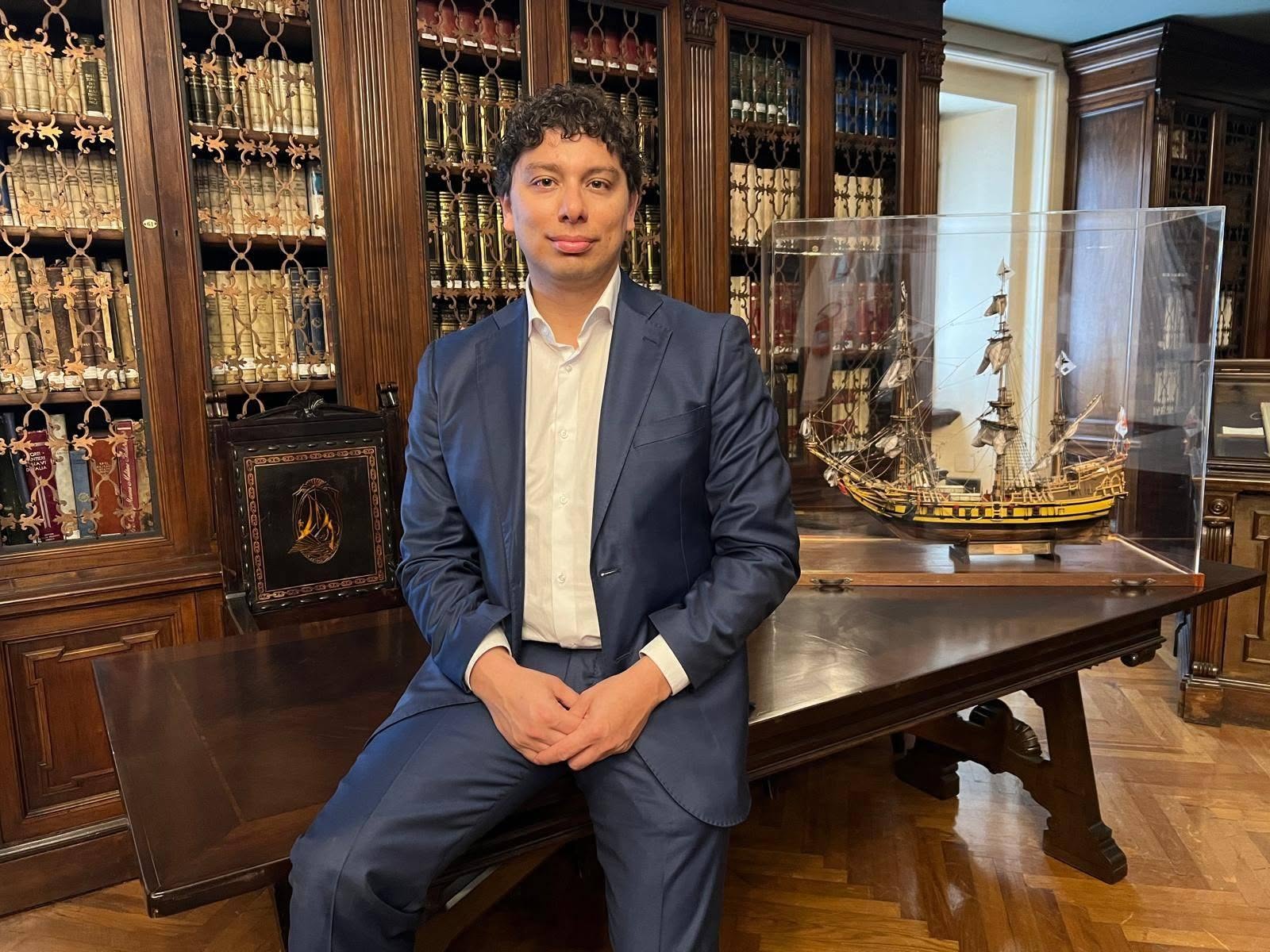
The research, led by Professor Fabio De Ninno of the Department of Historical Sciences and Cultural Heritage at the University of Siena and funded under the University’s New Frontiers projects, was conceived to return the sea to the centre of national history: not as a mere backdrop, but as a contested and constructed territory that, even today, has never been fully pacified.
“We are used to thinking of borders as lines drawn on land“, explains Professor De Ninno, “but the sea, too, has its borders, and they are far more recent than is commonly believed. For much of history, the prevailing principle was that of mare liberum: a sea free and open to all. Only after the Second World War did a true race to appropriate marine spaces begin. This turning point was triggered in 1945 by President Truman’s proclamation, which unilaterally extended United States control over the continental shelf. From that moment, the process of the ‘territorialisation’ of the sea began: the transition towards mare clausum, a sea enclosed and subject to the sovereignty of states. Since 1945, nations have appropriated rights over approximately 35% of the surface of the seas and 90% of the world’s fishery resources: one of the greatest territorial acquisitions in history, accomplished almost in silence“.
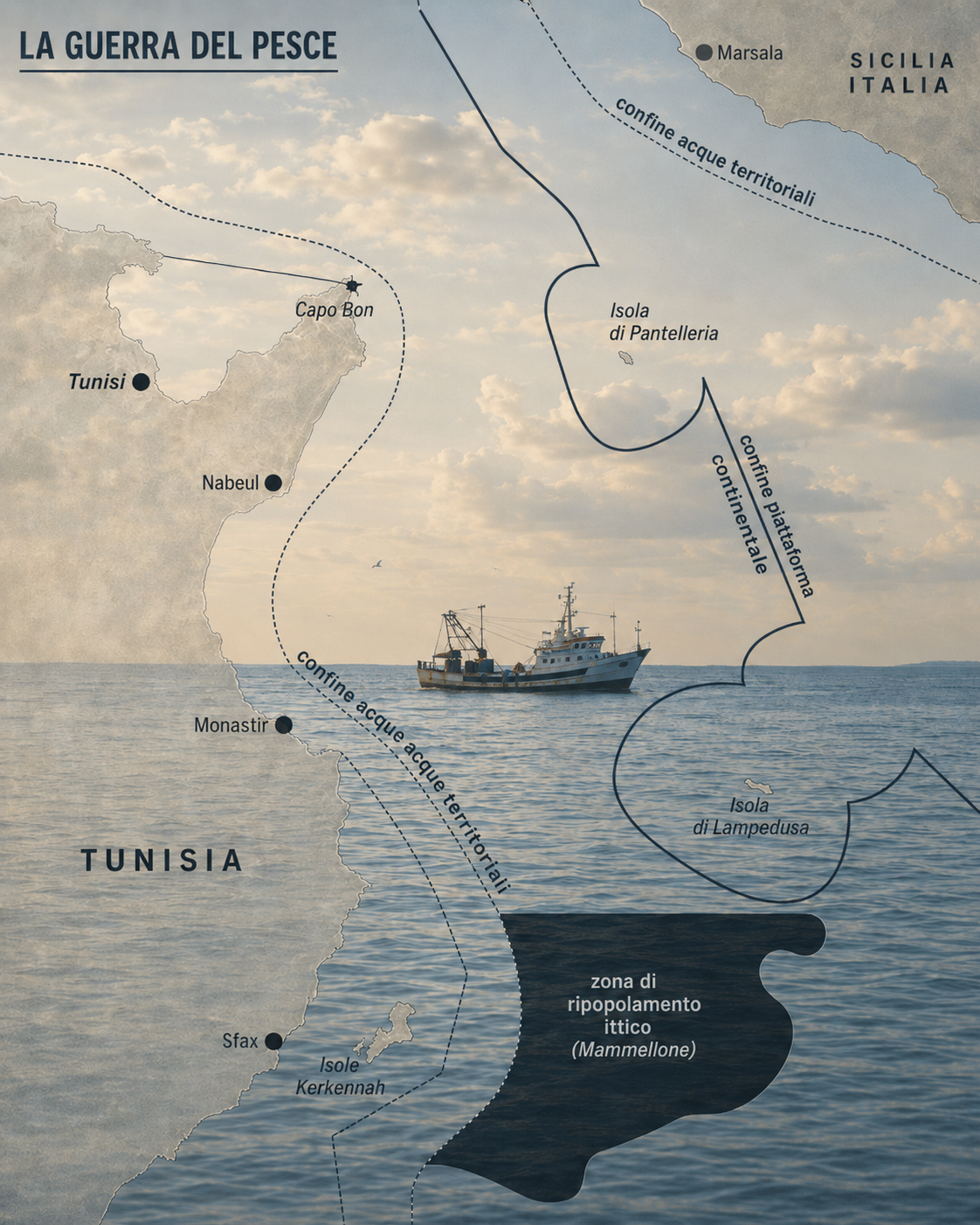
For Italy, situated between the Adriatic and the central Mediterranean, this process carried decisive weight along two fronts. In the north-east, in the Adriatic, the country confronted Yugoslavia through fragile fisheries agreements and recurrent incidents, while the redrawing of post-war borders – from the Trieste question to the Treaty of Osimo of 1975 – reshaped the limits of national sovereignty. To the south, in the Sicily Channel, the clash was even harsher and took the form of a veritable “fish war”: a prolonged and, at times, violent conflict between Italian fishermen and the newly independent states of the African shore, particularly Tunisia and Libya, which led to detentions, seizures of fishing vessels, injuries, and deaths.
“Behind these clashes lay the interweaving of immense geopolitical and economic forces“, the researcher continues: “decolonisation prompted Tunisia and Libya to claim control over their own resources, breaking with the privileges that Sicilian fishermen had inherited from the colonial era. At the same time, the Cold War required Italy to build stable relations with the African shore and, above all, energy mattered: Italy’s economic boom created an enormous appetite for oil and gas, and it was precisely in those territories that the country sought them. Rome could not afford to break with those countries in order to defend fishing: the choice was strategic, but its consequences fell upon local communities. For Italian seafarers – and in particular for the fishing community of Mazara del Vallo – this amounted to a historical reversal: within a few decades, the waters in which they had always sailed became someone else’s territory. The result was a slow and reluctant redefinition of Italy’s relationship with the sea, culminating in the 1982 United Nations Convention on the Law of the Sea (UNCLOS), the ‘Constitution for the Oceans’“.
The Mediterranean that emerges from this research is not the “sea that unites” of the collective imagination. It is a hierarchical space, made up of licences, nautical charts, baselines, patrols, and offshore platforms: a boundary constructed from scratch, which has divided North from South.
“This story is by no means over“, concludes Professor De Ninno. “Even today, our fishing vessels come under fire, and the maritime border has taken on a new guise: that of a barrier against migration. The words, the rhetoric, and even the gestures have remained strikingly similar to those of the 1970s. Understanding how these borders came into being is the only way truly to read the Mediterranean of today“.
Conceived as a “seed” project, The Making of Italian Maritime Borders now seeks to connect researchers from several countries in order to build a network capable of addressing these research themes.