


Why do people speak different languages? And how did the great language families of the world emerge and spread across continents? These are among the oldest and most fascinating questions in the study of human history. The research project “The Spread of Human Languages over Time across Climates and Eco-regions”, led by Luca Cilibrasi, professor at the Department of Social, Political and Cognitive Sciences of the University of Siena, explores an aspect of these questions that has received surprisingly little attention: the possible role of climate and environmental change in shaping the history of human languages.
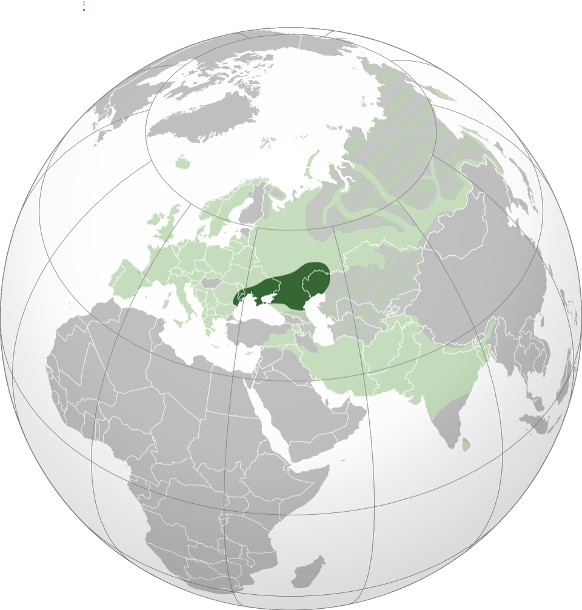
The project focuses on the Indo-European language family, one of the largest and most widespread language families in the world. Today, Indo-European languages are spoken by nearly half of the global population and include English, Spanish, French, German, Italian, Russian, Persian, and Hindi, among many others. Despite decades of research, scholars continue to debate when the speakers of the common ancestor of these languages (known as Proto-Indo-European) left the region they inhabited, the Caspian steppe, with hypotheses ranging between 8,000 and 6,000 years ago.
Recent advances in historical linguistics, archaeology, and ancient DNA have transformed our understanding of these processes. Researchers can now reconstruct ancient population movements with unprecedented precision and compare them with models of language diversification. Yet one important question remains largely unexplored: what role did environmental conditions play in these events?
“Our goal is not to argue that climate determines human history; human societies are far too complex for such simple explanations,” explains Professor Luca Cilibrasi. “Instead, we want to understand whether environmental changes may have influenced patterns of mobility, interaction, and isolation among human communities.”
One of the most intriguing periods for this research occurred around 8,200 years ago. During this time, the Northern Hemisphere experienced a sudden climatic disruption known as the “8.2 ka event.” Although relatively brief, it brought significant cooling and drying across large regions, leaving clear traces in climate archives ranging from ice cores to cave formations. What makes this event particularly interesting is that its timing overlaps with recent estimates for the earliest diversification of Proto-Indo-European. In other words, the period during which this ancestral language may have begun splitting into different branches appears to coincide with a phase of environmental instability.
Could this be more than a coincidence?
“To investigate this possibility”, continues the professor, “we combine evidence from several disciplines. We compare linguistic chronologies with paleoclimate records and ecological reconstructions. By integrating these different sources of information, we can explore whether major climatic shifts occurred at the same time as important linguistic and demographic changes.”
A distinctive feature of the project is its strong interdisciplinary nature, bringing together scholars from different departments at the University of Siena. Alongside Professor Luca Cilibrasi and Marina Stepanova (Department of Social, Political and Cognitive Sciences), who contribute expertise in linguistics, cognition, and cultural evolution, the team includes Emilia Petrocelli (Department of International and Political Sciences), bringing perspectives on language change and migration, and Gianmaria Bonari (Department of Life Sciences), who contributes expertise on ecosystems, vegetation dynamics, and environmental change. By combining these unique perspectives, the project examines language history not as an isolated phenomenon, but as part of a broader human-environment system.
Preliminary findings suggest that climatic instability may indeed have contributed to the fragmentation of early populations living in the Caspian steppe and neighboring regions. At the same time, later periods of climatic improvement may have facilitated population movements into the Eurasian steppe, creating conditions favorable for the spread of later Indo-European-speaking groups.
“What emerges is a picture in which language history is shaped by the interaction of many factors: human mobility, social organization, cultural transmission, genetics, and environmental change,” concludes Professor Cilibrasi. “Climate is not the sole driver, but it may have been an important part of the story. Questions about humanity’s past rarely belong to a single discipline. By bringing together linguistics, climate science, ecology, genetics, and archaeology, we can develop a richer understanding of how human societies evolved and how the cultural diversity we see today came into being.”