

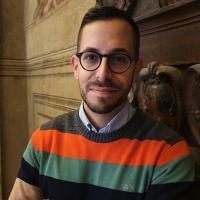
“Knowledge is something fascinating, irresistible and addictive. No obstacle, whether physical or intangible, can halt the spread of knowledge, bringing together all those who wish to contribute to its advancement. This conviction“, explains Dennj Solera, researcher at the University of Siena’s Department of Historical Sciences and Cultural Heritage, ‘was a cornerstone of the Republic of Letters, a sort of ideal supranational state to which the great scholars of the past felt they belonged, particularly from the time of Francesco Petrarca onwards. The Arezzo-born scholar provided that community of sages with an intellectual manifesto, centred on a love of the classics and the development of the sciences, with the aim of broadening humanity’s perspective on the reality around it”.
Indeed, over the centuries, this Republic of scholars was led by various giants of knowledge, to whom the members bestowed the title of ‘prince’ – the only one deemed worthy of representing them. Petrarch was the first of these princes, followed by other luminaries such as Pietro Bembo, before the leadership of the community passed definitively beyond the Alps, particularly to France and Germany.
The NEVEREND project (an acronym for Never-Ending Knowledge), funded as part of our University’s New Frontiers programme, aims to bring one of these unjustly forgotten figures out of the mists of the past: the last Italian to have held the title of sovereign of the Republic of Letters.
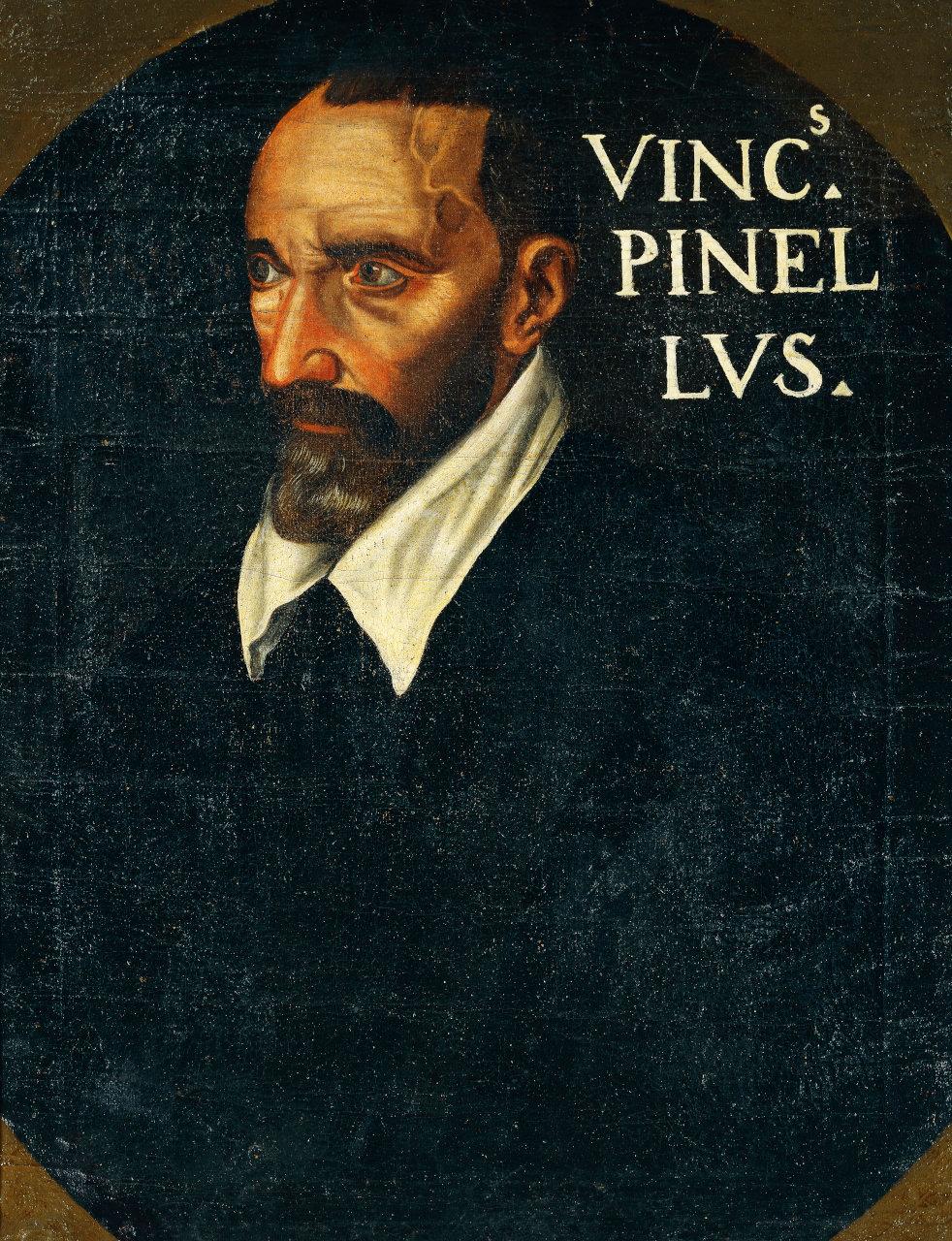
“We are talking about Gian Vincenzo Pinelli (1535–1601)”, explains Dr Solera. “A name that today appears neither in history textbooks nor in anthologies, but only in highly specialised studies in the fields of philology and library science. Almost no one today knows who Pinelli was, whereas all educated people in the second half of the sixteenth century would have been able to say who he was, where he lived and what studies he promoted”.
Born in Naples but having moved to Padua in 1558 to attend lectures at the prestigious University, he transformed his home into a hub of knowledge open to all. The only requirement for entry? To be a true lover and servant of the humanae litterae.
“The aim of NEVEREND is not so much to investigate Pinelli’s life story, but to understand his role as a cultural mediator in the Late Renaissance”, explains the researcher. “He was the most important organiser of knowledge of his time: he assembled the largest private library of the Renaissance (around 10,500 works) and made possible studies that would forever change the boundaries of knowledge. It was Pinelli himself, for example, who secured the chair of mathematics at Padua for Galileo Galilei in 1592, hosting the great scientist from Pisa in his own home and putting him in touch with Kepler and Brahe, key figures of the Scientific Revolution”.
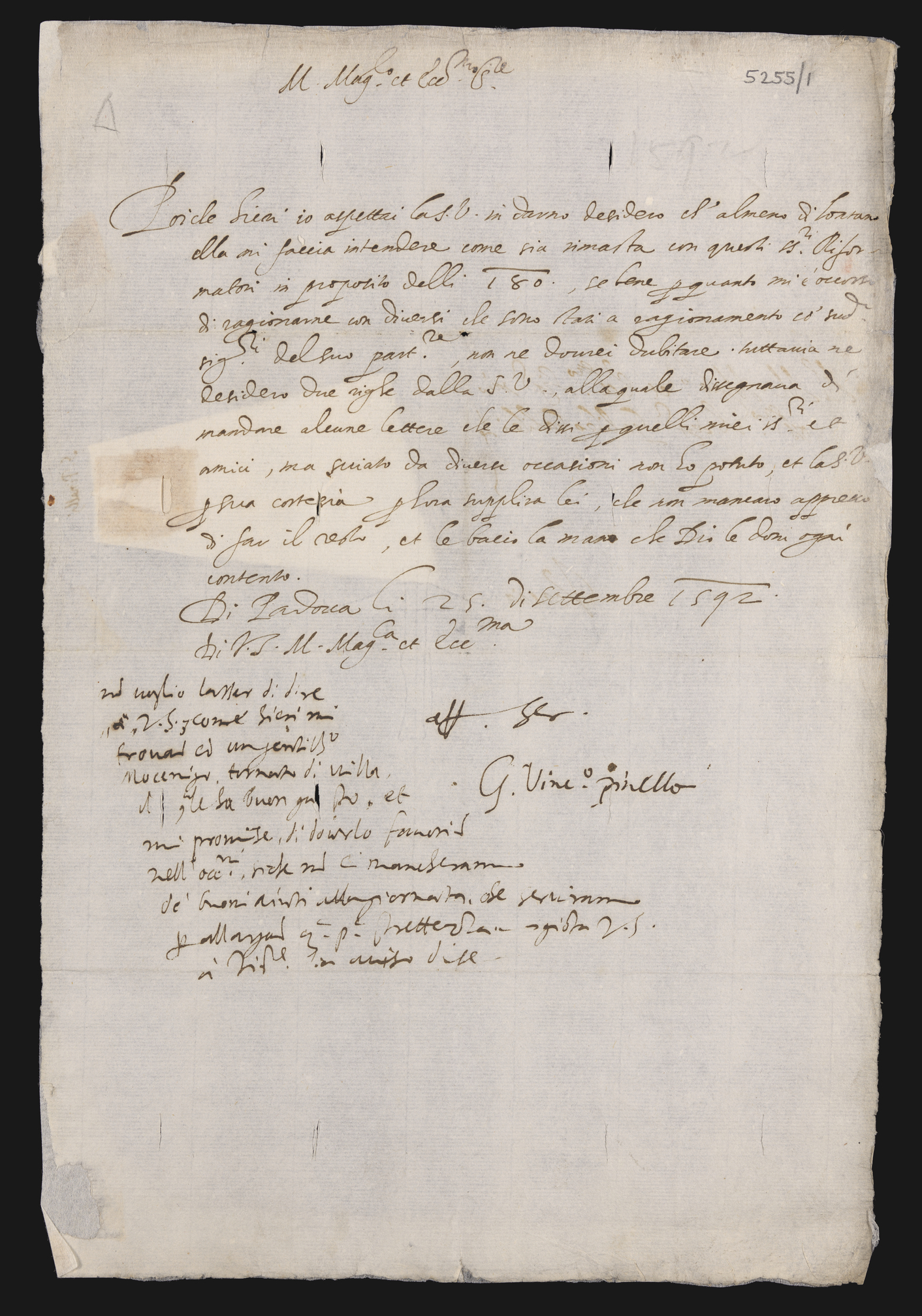
How can we reconstruct the immense body of intellectual work and dissemination that Pinelli undertook for almost half a century? The researcher himself answers this question: “Our ‘prince’ did not give university lectures, did not publish any works, and was extremely private about his own opinions. But he left behind an enormous number of letters, now scattered throughout Europe and beyond. The project focuses precisely on this extensive correspondence, part of which is preserved at the Biblioteca Ambrosiana in Milan. We have already identified no fewer than 206 correspondents, including the greatest names in the culture, politics and science of the time: from Ulisse Aldrovandi and Tycho Brahe to Paolo Sarpi and Galileo himself”.
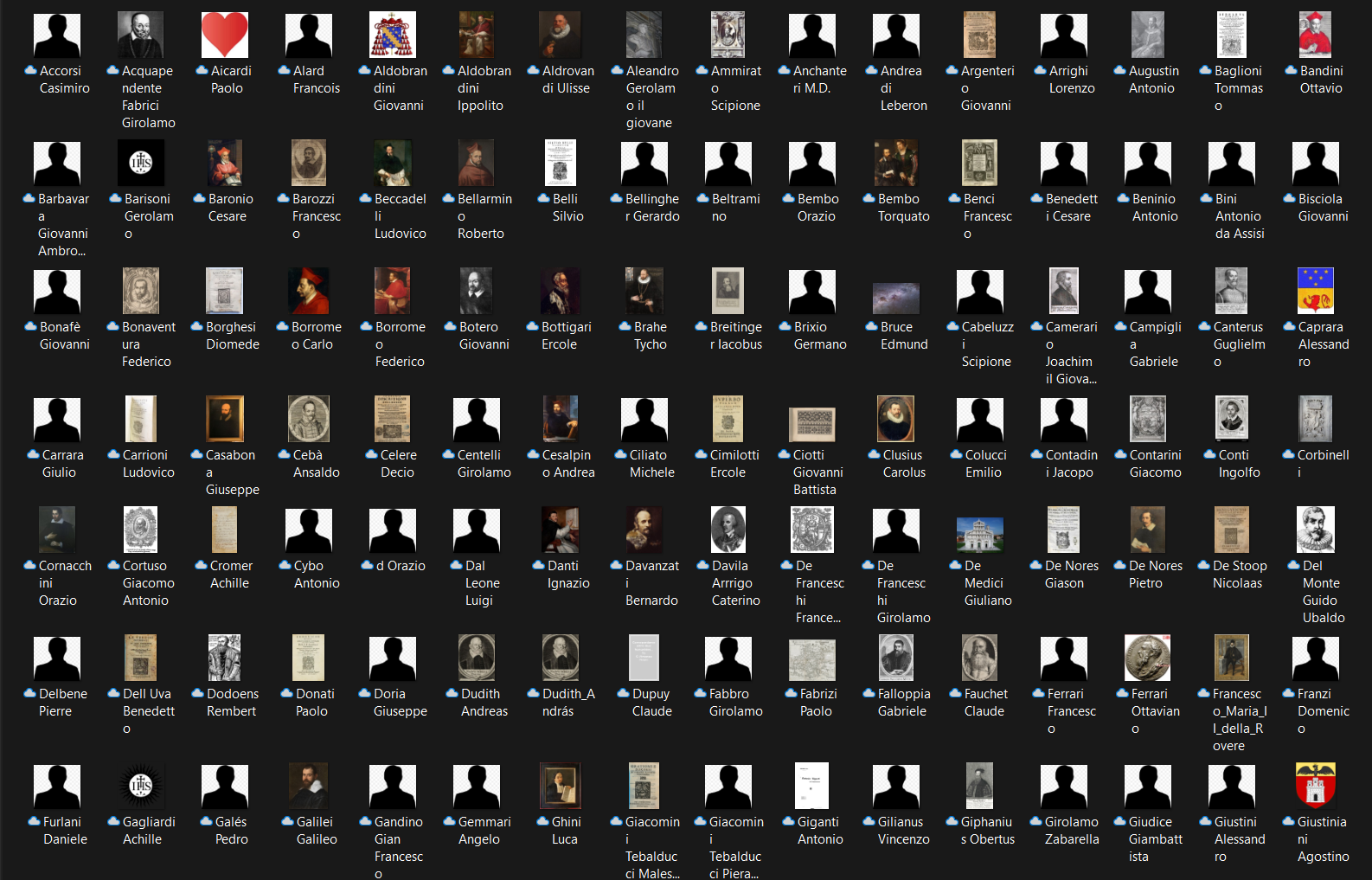
The project therefore aims to outline the communication channels used, the periods during which they were active, the most recurring topics in general or in relation to specific recipients, and the books, plants, coins and other objects exchanged. This will enable us to understand the true scope of Pinelli’s cultural mediation, establishing which scientific debates he initiated or fostered through his humanistic knowledge and personal connections. To reconstruct these communications, the research team will undertake numerous visits to institutions in Italy and abroad, such as the Vatican Apostolic Library, the Vatican Apostolic Archives, the Bibliothèque Nationale de France, the University of Basel Library and the British Library.
“Even during a historical period as hostile to free knowledge as the Counter-Reformation – when censorship reached its peak and the Scientific Revolution was taking its first steps – Pinelli established and maintained an open dialogue with all lovers of knowledge, regardless of religious or national affiliations or philosophical convictions”, concludes Solera. “Neither the passage of time, nor geographical distance, linguistic differences or differences of opinion, nor – above all – censorship and the threat of reprisals, ever dampened Pinelli’s desire to share knowledge, the full implications of which, in many respects, have yet to be understood. After all, we cannot help but agree with Giorgio Moroder: ‘written on the pages, is the answer to a never-ending story’”.