

In the field of medical and epidemiological research, HIV-1 infection remains one of the world’s major public health challenges. Despite the effectiveness of current antiretroviral treatment regimens, the emergence of drug resistance mutations continues to represent a significant obstacle to long-term therapeutic success, with substantial clinical, economic, and public health consequences.

In this context, molecular surveillance of the virus through viral genome sequencing is an essential tool for monitoring the emergence of drug resistance and guiding personalized therapeutic decisions.
The VALORE-HIV project (Development and Validation of a Long-Read Sequencing Protocol for HIV-1 Whole Genome Analysis), led by Francesco Saladini, Associate Professor in the Department of Medical Biotechnologies at the University of Siena, and funded through the University’s New Frontiers – Research Development Plan 2025 program, was conceived to address this complex clinical need in a timely and effective manner. Planned over a 24-month period, the project aims to introduce state-of-the-art diagnostic methodologies to personalize antiretroviral therapy and counteract the emergence and spread of clinically relevant drug resistance.
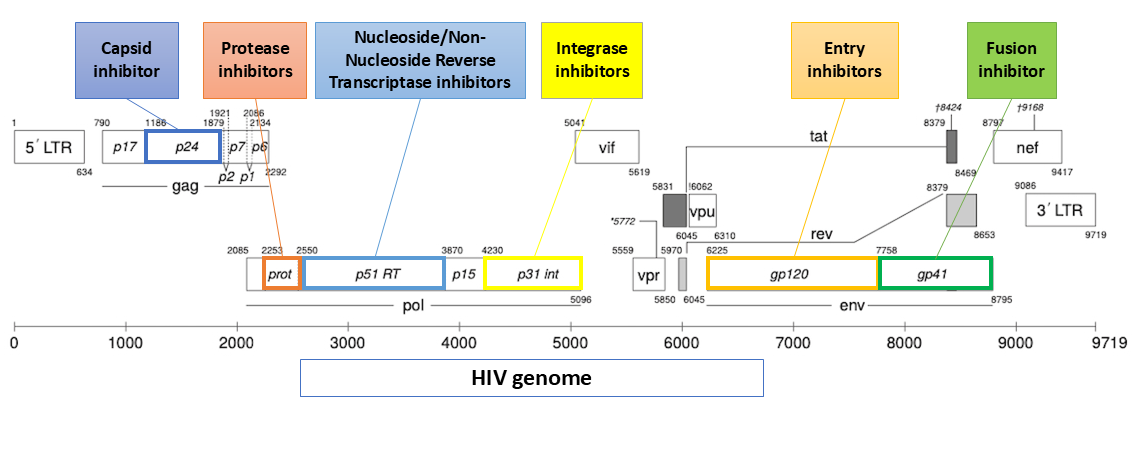
“Until now, standard tests for identifying HIV drug resistance mutations have focused almost exclusively on specific and limited regions of the viral genome,” explains Professor Saladini. “These regions correspond to the targets of the ‘classical’ antiretroviral agents. However, the recent introduction into clinical practice of innovative next-generation therapeutics targeting viral proteins encoded outside the traditional resistance genes, such as the capsid inhibitor lenacapavir and the entry inhibitors fostemsavir and ibalizumab, has made comprehensive analysis of the entire viral genome essential. Mapping the complete HIV-1 genome, approximately 9 kilobases in length, is the only practical approach to identifying mutations that may compromise the efficacy of the most recent and advanced treatment strategies.”
The HIV Infection Monitoring Laboratory of the Department of Medical Biotechnologies at the University of Siena, which has been continuously active since 1995 in the development of advanced molecular diagnostics and Sanger as well as Next-Generation Sequencing (NGS) methodologies, provides the ideal environment to lead this important technological transition.
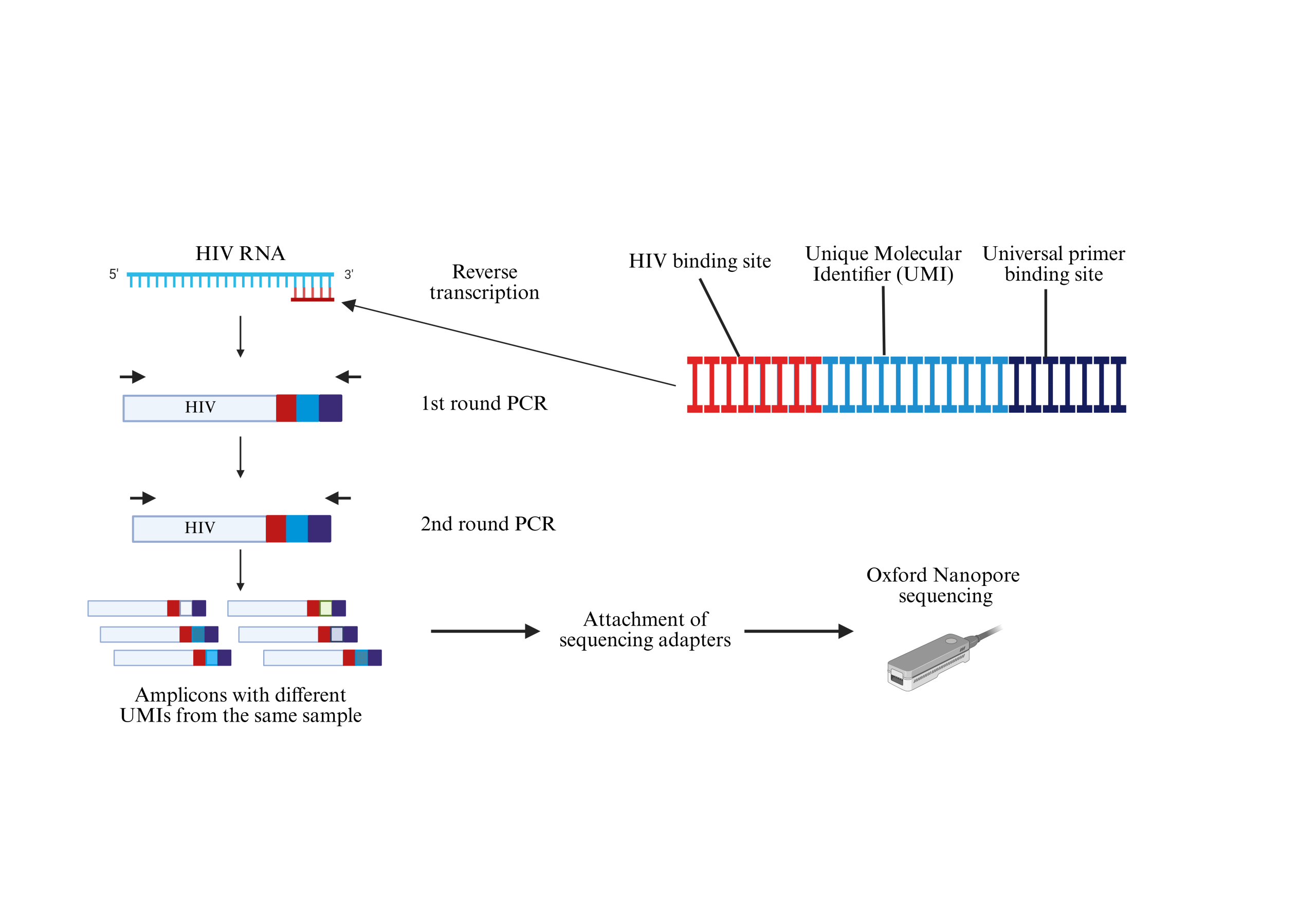
“The most innovative aspect of the project lies in the optimization of an experimental protocol based on the latest long-read sequencing platform developed by Oxford Nanopore Technologies,” Professor Saladini continues. “Unlike conventional short-read sequencing technologies, this approach offers the unique capability to analyze very long genetic fragments directly from individual viral RNA molecules. We will also implement the strategic use of Unique Molecular Identifiers (UMIs), nucleotide ‘barcodes’ designed to uniquely label every original RNA molecule in a biological sample, thereby ensuring a very high level of sequencing accuracy.” (Figure 2)
From an operational perspective, the study will initially optimize procedures for viral RNA extraction and whole-genome amplification by PCR. The optimized protocol will then be applied to a panel of 20 plasma samples representing the genetic diversity of HIV-1, provided by the ICONA Foundation biobank. In parallel, a dedicated bioinformatics pipeline will be developed to accurately reconstruct the different intra-host viral quasispecies and generate detailed clinical reports predicting susceptibility to antiretroviral drugs.
The success of this ambitious research effort is supported by the multidisciplinary expertise of the University of Siena research team, under the scientific supervision of Professor Maurizio Zazzi and with the collaboration of Professor Francesco Santoro for the development of the bioinformatics and data analysis framework. The impact of VALORE-HIV is fully aligned with the mission of the Italian HIV NGS Network, a national scientific consortium established in 2022 with the University of Siena playing a leading role. The network currently brings together 39 reference centers across more than half of Italy’s regions, with the goal of standardizing and harmonizing the transition from conventional sequencing methods to modern next-generation sequencing technologies.
“The implementation of this protocol will not only improve the personalization of antiretroviral therapy from the earliest stages of diagnosis,” concludes Professor Saladini, “but will also establish a methodological framework that can be extended to the molecular diagnosis of emerging viral pathogens, further reinforcing Siena’s role as a center of scientific excellence serving global public health.“