


What happens when a virus target the immune cells responsible for eliminating it? This question lies at the heart of MINE (Multifunctional Interference on CTL Network in Immune Evasion), a research project coordinated by Anna Onnis, researcher at the Department of Life Sciences of the University of Siena. Funded through the University’s New Frontiers research program, the project aims to shed light on one of the still poorly understood mechanisms by which SARS-CoV-2 evades the immune system.
“Over the past few years,” explains Anna Onnis, “research has shown that SARS-CoV-2 does not simply infect host cells, but is also capable of profoundly altering the function of our immune system.”
Among the most important defenders against viral infections are cytotoxic T lymphocytes (CTLs), specialized cells of the immune system, “soldiers” that recognize and destroy infected cells, thereby limiting viral spread.
To kill target cells, CTLs must establish a highly organized contact with their target cell, known as the immunological synapse. Through this specialized structure, CTLs recognize infected cells and deliver the cytotoxic molecules required for their elimination. When immunological synapse formation is impaired, the effectiveness of the immune response is significantly reduced.
The MINE project stems from a scientific observation that opens up a largely unexplored area of research.
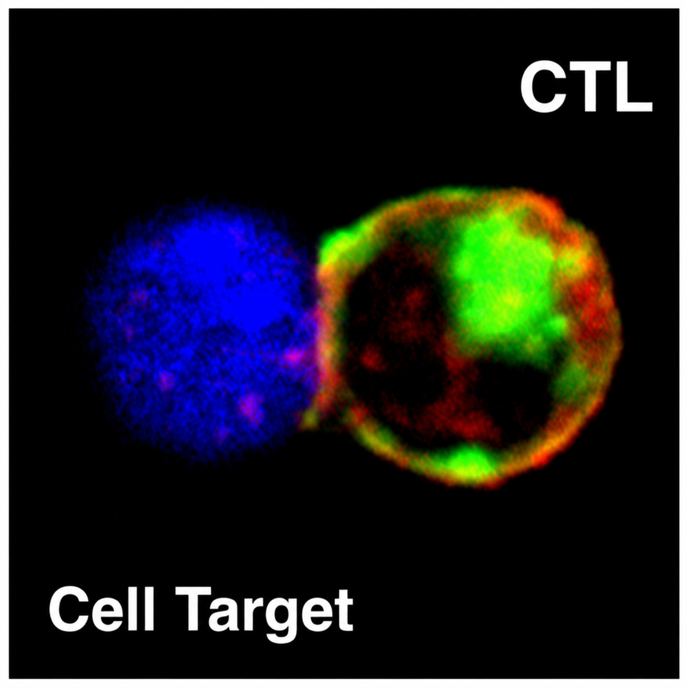
“In addition to interfering with the defense mechanisms of infected cells,” says the researcher, “SARS-CoV-2 appears to be able of directly entering cytotoxic T lymphocytes. This means that some of its proteins may act from within the cells responsible for fighting infection, altering their function.”
The project focuses on ORF3a, an accessory protein of SARS-CoV-2 known for its ability to interfere with multiple cellular processes. Previous studies have shown that ORF3a disrupts intracellular protein trafficking, regulates inflammatory responses, and contributes to creating a cellular environment favorable to viral replication. However, its role in T lymphocytes remains largely unknown.
“Our preliminary findings,” Onnis explains, “indicate that ORF3a reduces the ability of cytotoxic T lymphocytes to eliminate infected cells by directly interfering with the formation of the immunological synapse. Understanding precisely how this occurs is the primary goal of our project. To unravel this complex process, we will first identify the cellular proteins that interact with ORF3a and, in parallel, investigate how its presence alters gene expression in T lymphocytes. By integrating these datasets, we aim to reconstruct the complex network of cellular pathways disrupted by this viral protein and identify the mechanisms through which it weakens the immune response.”
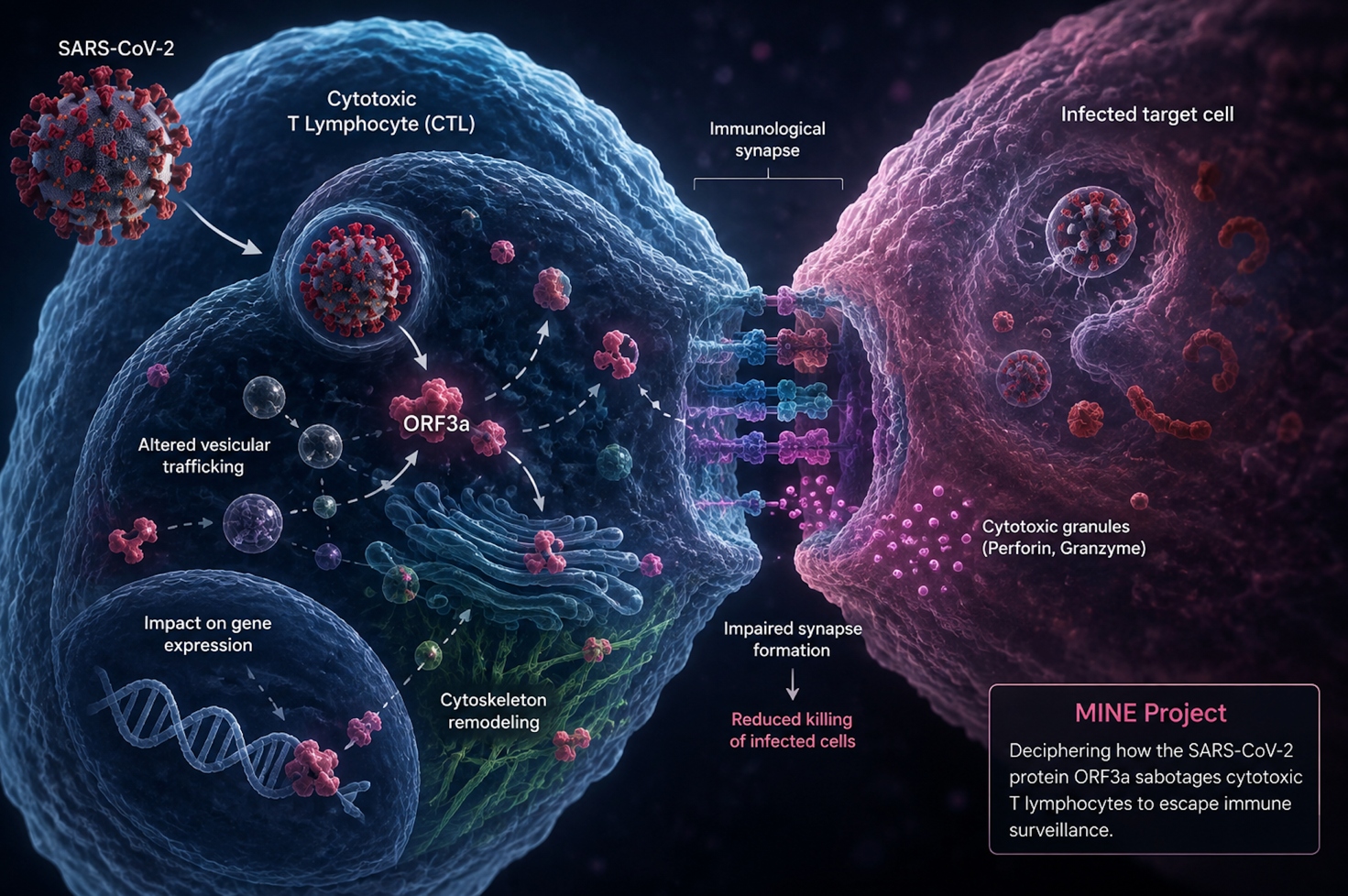
The results generated by MINE could extend beyond SARS-CoV-2.
“Many viruses,” the researcher notes, “have evolved sophisticated strategies to evade immune surveillance. Understanding how they manipulate and effectively ‘disarm’ the immune cells that are supposed to eliminate them represents one of the major challenges in biomedical research. Identifying these previously unrecognized immune evasion mechanisms may pave the way for innovative therapeutic strategies and provide valuable tools to better prepare for future outbreaks caused by other coronaviruses or emerging viral pathogens.”
Several years after the beginning of the COVID-19 pandemic, investigating the interplay between viruses and the immune system continues to raise new questions and open new research directions.
“With the MINE project,” concludes Anna Onnis, “we aim to understand how a single viral protein can disrupt the delicate balance between infection and immune defense. Ultimately, our goal is to provide a deeper understanding of the strategies that viruses use to survive within the host and to lay the groundwork for developing new approaches to counteract them.”