

Throughout its long colonial history, Italy built complex and stratified settlements in Africa, populated by hundreds of thousands of Italians, especially during the Fascist period. Yet, historiography has revealed far less than one might expect about the daily lives and contradictions of these communities.
To fill this gap, the C.a.r.t.e.g.g.i. project was born, an acronym for “Censura, società e relazioni intime: lo sguardo del regime sull’impero” (“Censorship, Society, and Intimate Relations: The Regime’s View of the Empire”). Funded by the University of Siena’s 2024 Research Development Plan, the two-year project aims to delve into an exceptional and still largely unexplored historical source: the private letters censored by the fascist regime.
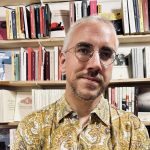
“These are letters written by Italian settlers, blocked by censorship authorities because they were deemed inappropriate, dangerous, or simply too sincere”, explains Emanuele Ertola, scientific director of the project at the Department of Historical Sciences and Cultural Heritage. “They contain everything: complaints, confessions, fears, desires. It’s extraordinary human material, allowing us to delve into an otherwise inaccessible everyday experience.”
The collection – consisting of hundreds of letters – is a unique historical source in Italy. Unlike diaries or memoirs written years later, these letters offer a “bottom-up” and real-time view of colonial life. Their very existence is paradoxically the product of the fascist regime’s obsession with control and its repressive apparatus. A misfortune for those who wrote them, but an invaluable resource for historians.
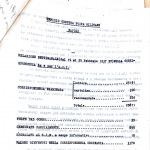
“The project’s objective is twofold,” Ertola continues, “on the one hand, to reconstruct the functioning of the censorship system; on the other, to restore a social and emotional history of the Italian communities in the empire“. To do this, the letters – scattered across various Italian archives – are collected, digitized, and then analysed using text mining and sentiment analysis techniques, tools based on the use of artificial intelligence.
But beyond academic research, which will lead to scientific publications and a monograph, C.a.r.t.e.g.g.i. also aims to public dissemination. A documentary film titled “Mia madre non lo deve sapere” (“My Mother Must Not Know”) is currently being produced, inspired by a letter describing a homoerotic and interracial relationship in occupied Ethiopia.
“Telling these stories also means confronting what we prefer not to remember“, the researcher concludes. “The censored letters speak of love and racism, of desire and violence, transcending the simple oppressor/victim dichotomy to offer a more informed and honest memory of our colonial past“.
The C.a.r.t.e.g.g.i. project is therefore a concrete example of how the university can combine cutting-edge research, digital humanities, and automated textual analysis with a profound historical and civic commitment. By engaging young scholars and fostering digital skills, it produces tools designed for teaching and dissemination, thus demonstrating the potential of little-known sources to enrich our understanding of history.