

A project that aims to develop new technologies in the field of Artificial Intelligence towards a more dynamic and conscious dimension: this is the goal of TINSELL, an acronym for Time-driveN StatEful Lifelong Learning, for Machine Learning with Neural Networks.

Professor Stefano Melacci, of the Department of Information Engineering and Mathematical Sciences, tells us about it.
What does TINSELL consist of?
Unlike current technologies, which rely on “offline” learning with pre-collected datasets, TINSELL considers models that learn “online”. In other words, Artificial Intelligence learns progressively and continuously over time, immediately exploiting the flow of information from an external source, such as a sensor, an audio, or a video, in an asynchronous manner. There are very complexchallenges to be faced, mostly related to memory units that are progressively built up over time. This is a radically different scenario from the one which is currently mainstream. TINSELL was born after the studies that I have been carrying out for many years in the “Learning Over Time” field. Up to now I have mainly worked on very specific problems to study different aspects of the subject. In recent times, however, I have felt the need to broaden the study aspects to cover the concept of progressive learning over time, as underlined in the perspective of Collectionless AI of which I am co-author.
Why are we in a different context than Artificial Intelligence, so popular today?
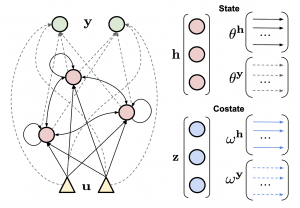
The Artificial Intelligence we know today, based on offline learning, often requires the user to repeatedly provide the entire context (the so-called “prompt”) to obtain each new prediction. It works, in practice, in a “stateless” way, without a long-term memory. TINSELL is instead based on the idea of “stateful” models, which explicitly include the concept of “state” in Neural Networks. This state works as a form of compact memory, which updates progressively and autonomously in a “recurrent” way and contains the encoding of what has been observed up to that moment.
What benefits can such a vision bring?
This vision brings with it numerous advantages, allowing interactions and corrections at the most appropriate times, depending on the level of development of the models. In addition, the project offers a better panorama in terms of efficiency, controllability and, above all, respect for privacy, an often-delicate issue for mainstream technologies. In fact, although TINSELL studies foundational aspects of learning over time, these have a direct impact on all applications of Artificial Intelligence. Learning without an explicit memorization of our data, without having to collect large datasets with unclear boundaries and contents in advance, and, above all, using models that could operate without depending on the Internet, offers new perspectives that aim to overcome obvious critical issues of what we all now use daily, when we send our data to third parties without “thinking about it”. Moving beyond the boundaries of TINSELL, we are currently working on a platform (UNaIVERSE) that allows people and artificial agents to co-operate in a privacy-oriented context, where in the future we will be able to study the technologies resulting from TINSELL.
Who is participating in the TINSELL project?
The TINSELL project, funded by the Research Development Plan (PSR 2024), involves PhD students, research fellows and scholarship holders from the Department of Information Engineering and Mathematical Sciences of the University of Siena belonging to the SAILab (Siena Artificial Intelligence Lab). The group has multiple experiences in the field of Artificial Intelligence, especially Machine Learning, both in scientific research and technology transfer. In particular, we have been working for many years on problems of Learning Over Time, which characterizes us in the research landscape. To give an example, in March 2025 we organized a Spring School for PhD students, focused on our research topics, at the Certosa di Pontignano, with great participation despite it being the first edition. In July 2025, as Program Chair I helped to bring to Italy and organize the International Conference on Lifelong Learning Agents (CoLLAs).