

The evolution of wireless telecommunications is entering a decisive phase. While 5G continues to consolidate, the scientific community is already looking beyond it, envisioning 6G as a network capable not only of communicating, but also of perceiving the surrounding environment. In a world where billions of objects will be connected through the Internet of Things, the network will become an integral part of everyday life, requiring extremely high data rates and ultra-low latency for applications such as virtual reality, autonomous vehicles, and smart industry.
 To address these challenges, revolutionary technologies are needed—technologies capable of managing interference and optimizing resources in real time. At this technological frontier lies the EMOTIONS project, led by Professor Marco Faenzi from the Department of Information Engineering and Mathematical Sciences at the University of Siena. The project focuses on one of the most promising directions in current global research: the development of Smart Radio Environments (SREs), intelligent environments in which objects themselves become active agents capable of manipulating radio waves.
“The beating heart of this revolution lies in metasurfaces (MTS)”, explains Professor Faenzi. “These are thin structures composed of thousands of micro-elements designed to shape electromagnetic wave propagation. Thanks to them, we can generate customized radio beams and reconfigure them in real time, in an energy-efficient manner and without the need for complex signal-processing systems”.
The key to their operation lies in the accurate design of their surface impedance (IBC). As the professor points out, IBC is the parameter that enables the transformation of a surface wave into a space wave: “By controlling the IBC, we can precisely shape the amplitude, phase, and polarization of the radiated fields. This allows us to generate user-specific radio beams while maintaining a flat, lightweight surface that can be easily integrated into virtually any environment”.
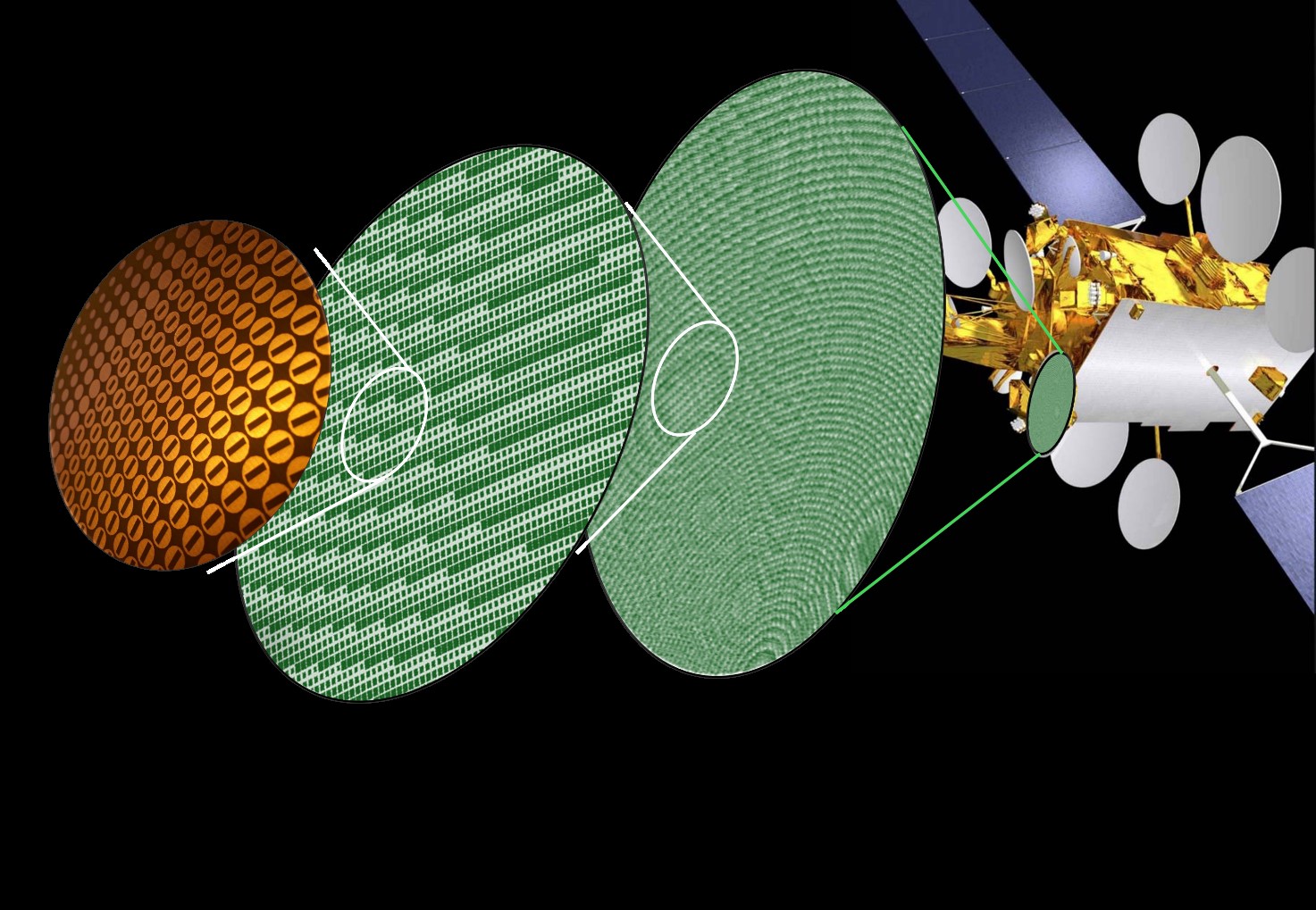
Despite their great potential, designing such surfaces remains a complex challenge. In many scientific studies, metasurfaces are treated as “ideal” models, often neglecting losses, commutation time limitations of active elements, coupling effects, and frequency-dependent responses.
“The EMOTIONS project aims to bridge this gap through a dual strategy”, continues the researcher. “On one hand, we focus on developing an accurate characterization of metasurfaces based on equivalent impedance models capable of reliably predicting the behavior of individual unit cells. On the other hand, we aim to refine an inverse design methodology—based on Electric Field Integral Equations (EFIE)—that allows the direct synthesis of the IBC required to generate even highly complex radiation patterns”.
This approach will enable computational times compatible with the dynamics of wireless channels, making real-time beam reconfiguration possible.
To achieve these goals, the research activity is structured along two main directions. The first concerns the study of active elements, from the selection of the most promising technologies to the development of analytical models for evaluating losses, response times, and circuit complexity. The second focuses on the advanced development of the direct IBC synthesis method, extending it to multi-source surfaces capable of generating multiple simultaneous beams or adaptive scenarios based on user positioning.
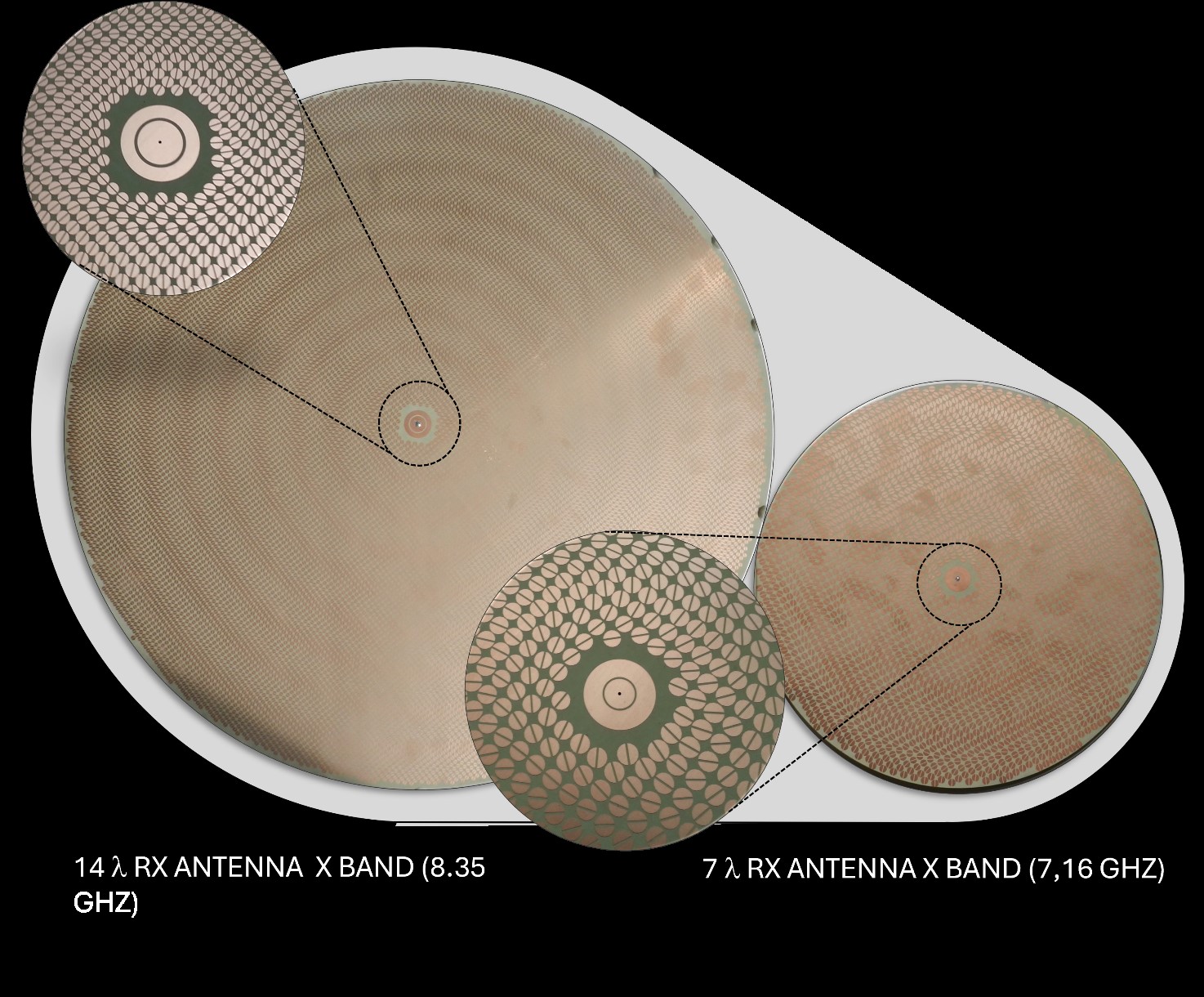
The ultimate objective is to integrate these results into validated prototypes through electromagnetic simulations and laboratory measurements.
“The innovative potential of EMOTIONS is enormous”, concludes Professor Faenzi. “Antennas based on adaptive metasurfaces will become key components of future 6G networks, enhancing coverage, link quality, user localization, and intelligent radio-resource management. The project will also provide fundamental models and design guidelines for the development of multifunctional devices, contributing significantly to the transition toward truly intelligent radio environments”.
LEA is one of the most active European research groups in basic theory of electromagnetism, with emphasis on 1) High Frequency Scattering and Diffraction, 2) Phased array antennas, 3) Metamaterials and electromagnetic bandgap materials; 4) Numerical Methods for EM, 5) Artificial surfaces, 6) Radio Frequency ID and microwave sensor. Figure 1 below synthesizes the main research activities. LEA has been among the key players in the research and development of novel metasurface-based antenna architectures and leaky-wave antenna designs.