

An activity developed within the DSICity project by a research team from the Department of Social, political and cognitive sciences
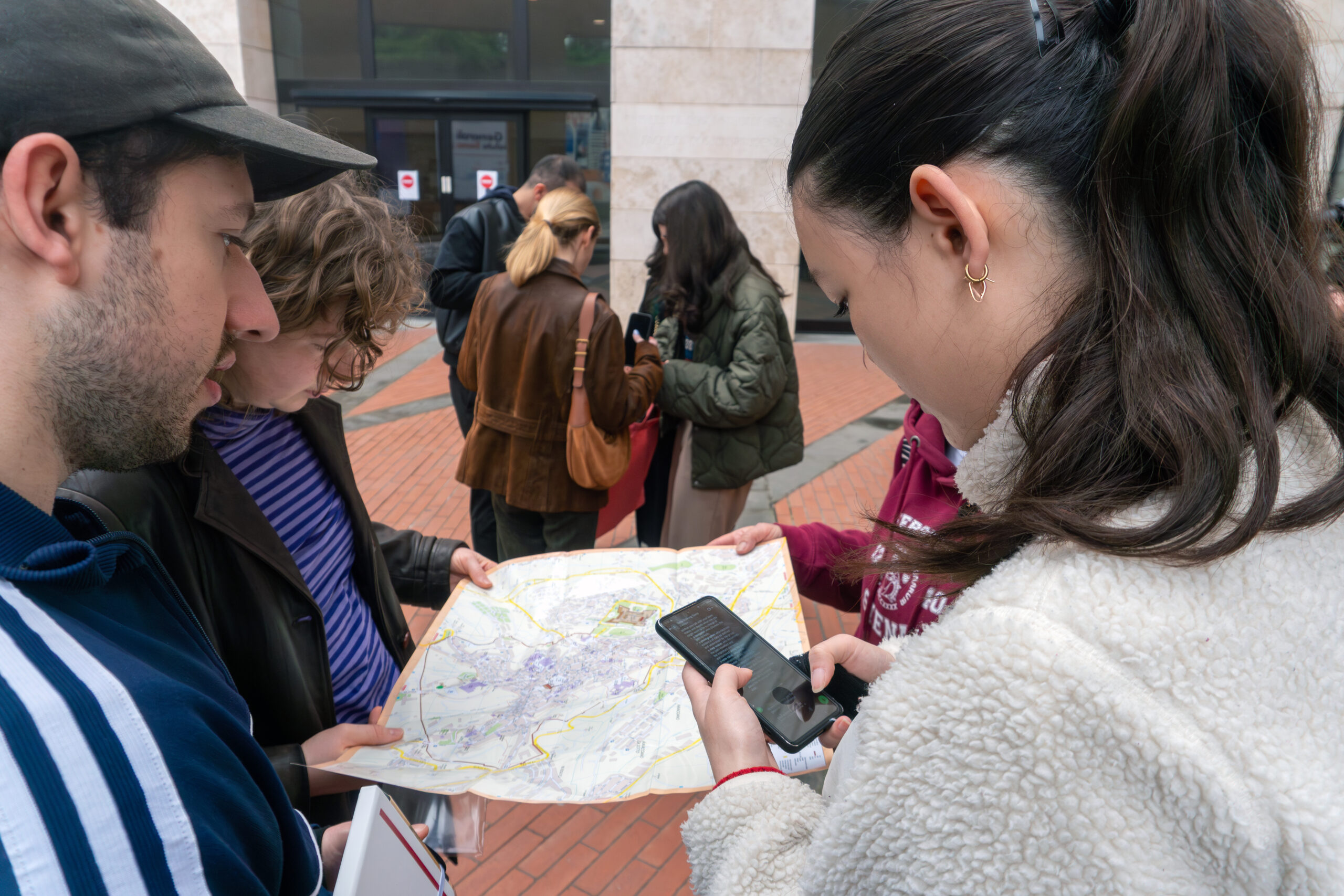
What is data? This deceptively simple question launched a unique exploration through the streets of Siena, led by a team of geographers from the University of Siena, Dr. Venere Stefania Sanna, Prof.Cristina Capineri and Dr. Pouya Sepher , from the Department of Social, political and cognitives sciences.
Venere Stefania Sanna told us about this activity developed within the PRIN 2022 project Digitally-enabled Social Innovation in the city: implications for urban spaces, societies and governance (DSICity) funded by the Italian Ministry of University and Research (MUR) and financed by the European Union – Next Generation EU.

“Data Walking is not a conventional activity”- she explains – “it’s a method, a practice, a collective act of sensing the city (with all its seen and unseen infrastructures) through movement, curiosity, and layered observation. It began sitting in a circle, students with notebooks and maps, Siena stretched before them like a living text! Each group set off with a different theme (citizenship, surveillance, the commons, ethics) not just following GPS, but tracking signals, signs, QR codes, and everyday interfaces that revealed how deeply data is woven into urban life”.
“Walking became a way of seeing” – she emphasizes – “What seems mundane – a public sign, a street corner, a camera overhead – turned into an opportunity to read power, trace networks, and sense the unspoken architectures of civic life. Smartphones buzzed with WhatsApp messages coordinating roles: the walker, the observer, the documentarian. Even this choreography was data-driven”.
“Along the way, students recorded not just what they saw, but how it felt – through sketches, emoji stickers, quick notes, and spatial reflections. Coloured dots on a map marked more than locations; they traced emotions, insights, and atmospheres: data that resists easy quantification. As they paused beneath surveillance cameras or mapped the traces of bureaucratic systems, the question evolved: Who collects data? Who benefits? What remains invisible? Data Walking offered no final answers. Instead, it invited new ways of asking. It made data strange again – more human, more complex. It turned Siena into both a dataset and a dream, a city that speaks not only through infrastructure but through interpretation and collective noticing. In the end, the city became more than just a place, it became a question in motion”.
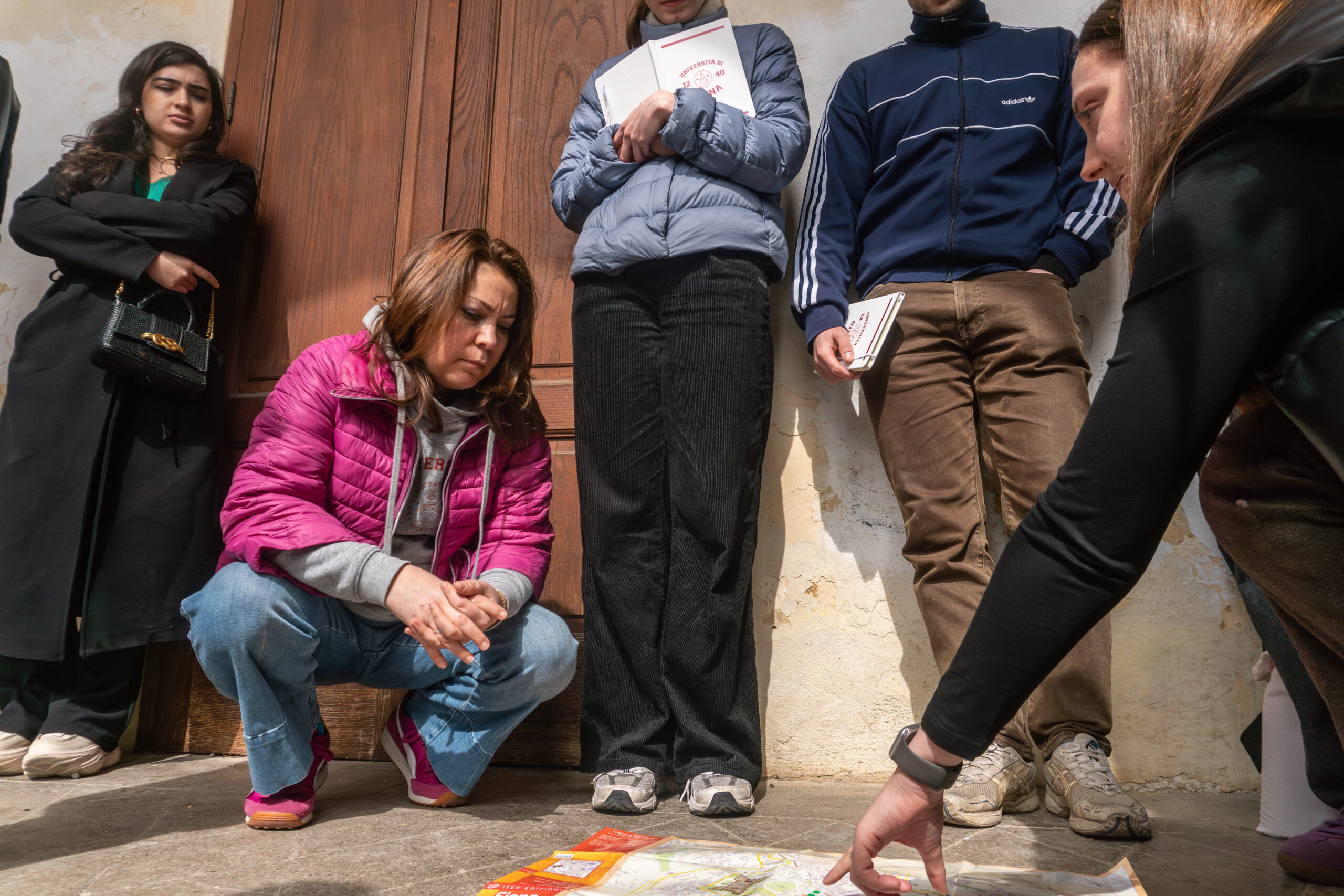
The activity produced a video and a photo report.
The DSICity project aims to understand the socio-political effects of digital social innovation (DSI) on urban environments through a comparative analysis of DSI movements and spaces in two distinct urban contexts: Turin and Rome. The comparative study focuses on several key areas: existing ISD landscape, quantitative and qualitative analysis, community practices and spaces, digitisation and urban reproduction. Using a mixed approach, integrating on-line and off-line data collection techniques such as web mining, participant observation and field work, the project aims to collect valuable lessons on promoting sustainable and socially just urban transformation in the digital age.
