

Skeletal muscle is the most abundant tissue in our body, and its malfunction can severely compromise the patient general welfare — causing, in milder cases, reduced muscle performance and deambulatory problems, and in more severe forms, respiratory difficulties and the need for assisted mobility, and even lead to infant or juvenile death.
In addition to dystrophies, which cause a progressive reduction and loss of muscle mass, congenital myopathies are rare genetic conditions that do not cause a substantial loss of muscle tissue, but drastically reduce its functionality. They often appear in childhood, leading to decreased strength and endurance. Unfortunately, to date, there is no available cure for these diseases.
Developing an effective gene therapy approach for these rare diseases faces two main challenges: the variability of mutations — which can affect not only different proteins involved in muscle contraction but also different regions of the same protein, making it difficult to design targetedtherapies — and the need to use high doses of the therapeutic agent due to the large amount and widespread distribution of muscle tissue throughout the body, thus increasing the risk of side effects.
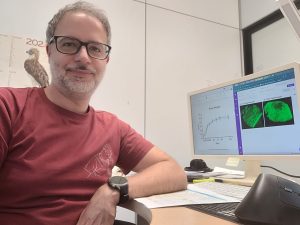
The MIREMEDY project, led by Professor Stefano Perni of the Department of Molecular and Developmental Medicine, aims to address both of these challenges simultaneously.
“Instead of following the classic gene replacement approach — that is, replacing the mutated gene with a healthy one,” explains the Professor, “we chose to modulate a particular microRNA particularly abundant in muscle cells.”
MicroRNAs are important regulators of gene function that can influence many cellular processes, including metabolism, maintenance, and tissue growth. In particular, the microRNA under investigation is particularly enriched in muscle, where it has been shown to promote muscle function and performance. Its activity can be enhanced by increasing its levels in the cell.
“The advantage of this approach”, continues Prof. Perni, “is that it can benefit myopathic muscle regardless of the type of mutation or protein involved, aiming instead to improve and preserve its overall health and performance”.
To induce greater production of our microRNA and enhance its effects, the team inserted an optimized DNA sequence into a next-generation adeno-associated virus (AAV). AAVs are particularly suitable vectors for gene therapy because they efficiently infect cells without self replicating or causing diseases.
“The AAV type we selected was specifically developed by researchers at Harvard University for targeted use in skeletal muscle”, the researcher concludes. “The optimization of the delivery strategy aims at creaitng a system that is effective at significantly lower doses than more ‘classic’ viruses, thereby reducing the risk of side effects”.
The project will unfold over two years and involves, alongside Prof. Perni as coordinator, young investigators and PhD students such as Dr. Chiara Ricciardi, who is directly involved in the project, and Dr. Valentina Guardascione, who worked on its initial phases.
A crucial element of the project is the guidance and profound expertise of the members of my research group, led by Prof. Vincenzo Sorrentino, who has long studied congenital myopathies and potential diagnostic and therapeutic strategies for these rare but often highly disabling diseases.
“At present, we have completed the optimization phase of the viral vector which, after administration, boosts microRNA expression at levels we estimated to be therapeutic in mice muscles . We have therefore moved on to the second phase of the project — testing our system on mice affected by myopathies. The first tests, carried out three months after treatment, show encouraging results, with a significant improvement of muscle performance in the treated myopathic mice”.