

In recent years, the Circular Economy has gained remarkable momentum on the global political agenda, representing a new and promising economic paradigm that enables governments, companies, and institutions to reduce environmental impacts, optimize resource use, and limit waste generation. Among resource- oriented activities, recycling is the most common “circular” practice, a rapidly expanding sector that is attracting the interest of investors worldwide.

This is the focus of the CIRQLAR project, led by Professor Dario Caro of the Department of Physical, Earth and Environmental Sciences at the University of Siena. The starting point is a regulatory paradox, which the professor explains as follows: “Although Directive 2008/98/EC defines recycling as any recovery operation by which waste materials are reprocessed, this description encompasses very different processes, with extremely variable levels of quality and effectiveness.”
“The Waste Framework Directive and the European Commission’s Circular Economy Action Plan” the professor continues, “also emphasize the importance of ensuring ‘high-quality recycling’ to increase the quantity of reusable materials. However, these regulations do not provide a rigorous definition of this concept. To date, there is still no clear definition of what is meant by quality of recycling and, above all, no indicator to assess it”.
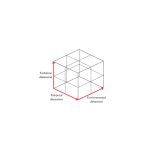
The aim of the project is therefore to fill this methodological gap by developing an indicator for individual waste fractions. “Starting from the basic definition of the circular economy and its most important objectives, CIRQLAR will develop an operational mathematical framework aimed at generating an indicator capable of measuring the quality of recycling processes for individual waste fractions” explains the researcher. “The application of the indicator will be tested on major recycling processes related to construction and demolition waste fractions, which represent one of the most significant sectors in the EU in terms of waste management”.
So far, indicators proposed to estimate recycling quality have focused on single dimensions of quality, failing to capture the multidimensional aspects reflected in the concept of circularity.
CIRQLAR instead aims to provide a framework based on the very definition of the circular economy, capable of capturing and weighting all the necessary parameters.
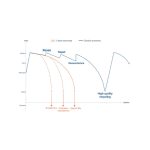
“Three main dimensions—environmental, technical and temporal—will be integrated into a single indicator, capable of revealing the quality of recycling processes for individual waste fractions. The final outcome will be a qualitative assessment of recycling quality” concludes Professor Caro.
The project, which will run for one and a half years, is coordinated by Professor Caro, supported by a youngvresearcher, Dr. Sebastiano Renzetti, and by the crucial contribution of the Ecodynamics research group, led by Professor Simone Bastianoni.
CIRQLAR has also an international support thanks to the collaboration with Hot or Cool, a prestigious Berlin-based think tank operating at the intersection of society and sustainability. Possible synergies are also envisaged with the European Commission’s Joint Research Centre (JRC), where Professor Caro previously worked, to further strengthen the project’s management and impact.